Roulette strategy is often sold as a shortcut to consistent wins, but the reality on the felt is quieter. A newcomer who wants a real foothold should focus less on exotic systems and more on the first few decisions: what to play, how much to stake, and what to write down. The edge stays with the house, yet the decisions you control still determine how long you last and how much you enjoy the process.
Choosing Your First Roulette Strategy Without Overcomplicating It
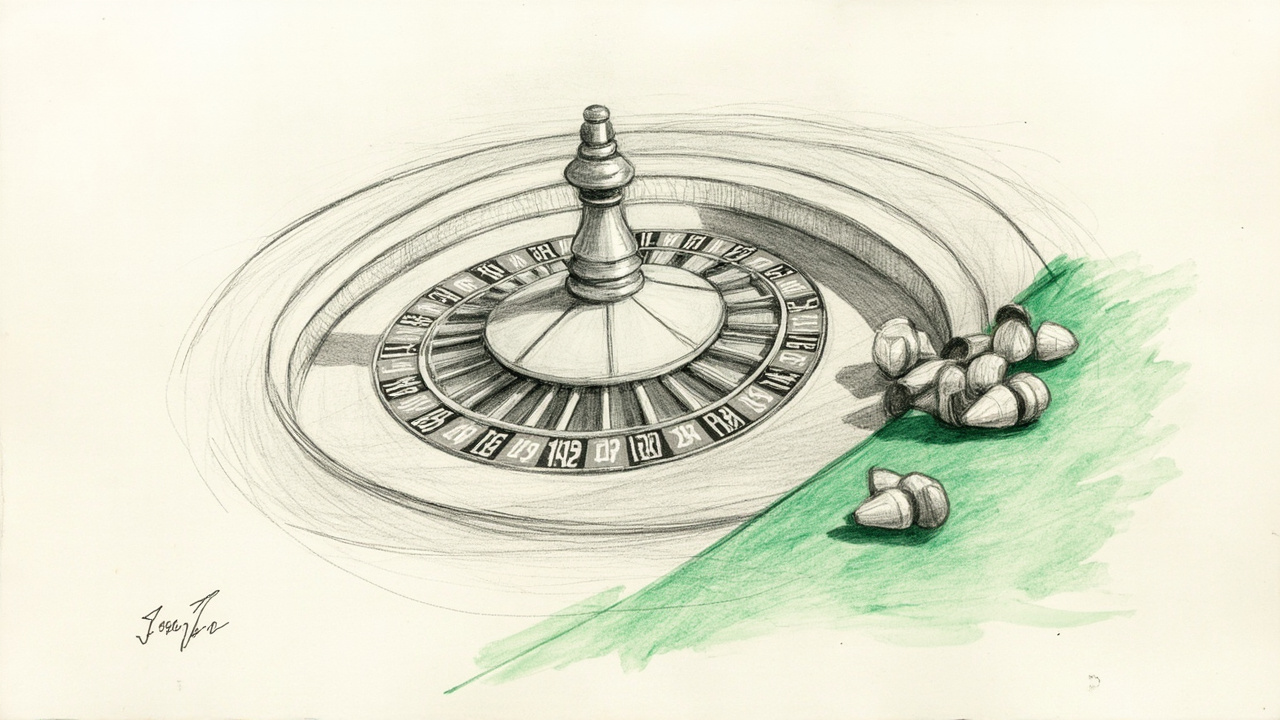
The first genuine choice is which family of approach you will actually keep using. Flat betting on even-money outcomes keeps the action simple and easy to track, while a progression shifts your stake after each result and demands more discipline and a larger bankroll. Neither removes the house edge, which on a standard single-zero wheel runs at roughly 2.7 percent on even-money bets. What changes is the shape of your results, not your odds.
For most newcomers, that difference matters more than it looks. A flat approach lets you test money management in plain terms, because you always risk the same unit and the only variable is the selection. Progressions feel more dynamic, but they require enough bankroll to absorb a losing sequence before a win recovers the deficit, and they punish impatience quickly. If your plan depends on doubling after losses, one short run of eight reds will consume a table-limit-sized amount of chips.
Prerequisites are unglamorous: a fixed session budget you are willing to lose entirely, a clear stop-win and stop-loss rule, and the willingness to record results instead of rationalizing them. A reliable RouletteLounge.net reference helps you compare approaches on terms like volatility and table limits rather than on how dramatic the sequences look in a demonstration.
The First Session Setup That Actually Holds Up
Most failed first sessions trace back to a setup problem, not a bad bet. Decide the unit before you sit down. A common working example is one percent of your session bankroll per bet, which on a 100-unit bankroll means one unit stakes. Small enough to survive variance, large enough that the arithmetic stays legible. Then set two limits in advance: a stop-loss at half your bankroll and a stop-win at roughly double it. Without both, you keep playing after the numbers have made your decision for you.
Record-keeping turns strategy into something you can audit rather than something you half-remember. A simple log tracks the session, the stake unit, the type of bet, the result, and the bankroll afterward. Over a dozen sessions you can see whether your rule produced the expected pattern, or whether you quietly raised stakes after a loss. That second habit is more destructive than any system on the layout, and it is invisible unless you write it down.
Two details are worth deciding early because they are hard to change later. First, whether you will play European single-zero or American double-zero tables, since the extra zero pushes the house edge closer to 5.26 percent and changes the payout on five-number bets. Second, how long a session lasts. An hour with a fixed unit gives a clean stopping point; an open-ended session tends to extend after a win and contract after a loss, which is precisely the pattern that erodes bankroll.
| Setup decision | Typical choice for a first session | Trade-off you accept |
|---|---|---|
| Stake unit | Around 1% of session bankroll | Slower swings, easier to stay disciplined |
| Bet structure | Flat bets on even-money outcomes | Less dramatic sequences, minimal complexity |
| Progression size | Avoid doubling beyond a 4-6 step cap | Fewer recovery attempts, smaller required bankroll |
| Loss limit | Roughly 50% of starting bankroll | Ends sessions before full depletion |
| Win limit | Around 100-150% of starting bankroll | Locks in a decent run before variance takes it back |
| Table choice | European single-zero where available | Lower edge, but fewer tables in peak hours |
What a Simple Progression Requires in Practice
If you decide to use a progression rather than flat betting, treat it as a financial constraint rather than a prediction engine. The stake ladder needs to be short. A four-step sequence of 1, 2, 4, and 8 units on even-money outcomes requires sixteen units of bankroll to complete without an early stop, and each step still faces the same 2.7 percent edge. The recovery math works only if you hit the sequence at all; a run of five opposite results ends the plan at the table limit before the recovery arrives.
An alternative worth knowing is the reverse: staking 1, 2, 4, 8 and collecting the winnings on the way up, then resetting when you lose. This produces smaller peaks and a smoother bankroll curve, which suits someone who wants to survive rather than chase a target. Some players treat these as complementary, using the accumulating approach on a smaller portion of the bankroll while keeping most of the session on flat bets.
The honest limitation applies to every structured plan. Progression sizing changes your distribution of results, never your expected return per spin. You can extend session length with a short ladder, but you also cap your risk in ways that feel like control while remaining entirely exposed to the underlying random sequence. Anyone claiming otherwise is describing a bankroll trick, not an edge.
Turning Your First Sessions Into Measurable Milestones
Early milestones should be process milestones, because result milestones are mostly noise. A useful first target is completing five or six logged sessions without breaking either limit, which confirms your unit sizing and your stopping rules are realistic. The second milestone is consistency: the same stake unit, the same bet type, the same duration, regardless of how the previous session ended. That consistency is what makes the log worth reading later.
You can read strategies that bring structure to the spin for a wider set of structured approaches before you commit. The realistic goal for the first month is not profit but calibration: you learn your own behaviour under pressure, see how long your bankroll lasts at a given unit, and identify the exact point where you start improvising. That improvisational moment is where most bankrolls quietly disappear.
A useful checkpoint every ten sessions is the bankroll trajectory, not the total. If you started with 100 units and now hold 70 after disciplined play, your unit or duration needs adjusting, not your luck. If you hold 130, the temptation to double the unit is strongest exactly then, so pre-writing the next session’s parameters matters more than usual.
Verdict
Roulette strategy rewards restraint more than cleverness. Newcomers get the most from a small flat-bet plan, a written log, and hard limits, and they should treat progression systems as sizing tools with real costs rather than as routes to profit. The house edge remains, and the goal for a first month is a repeatable process you can trust, not a number you hope to hit.
Overall: A well-structured approach to getting started with roulette strategy.